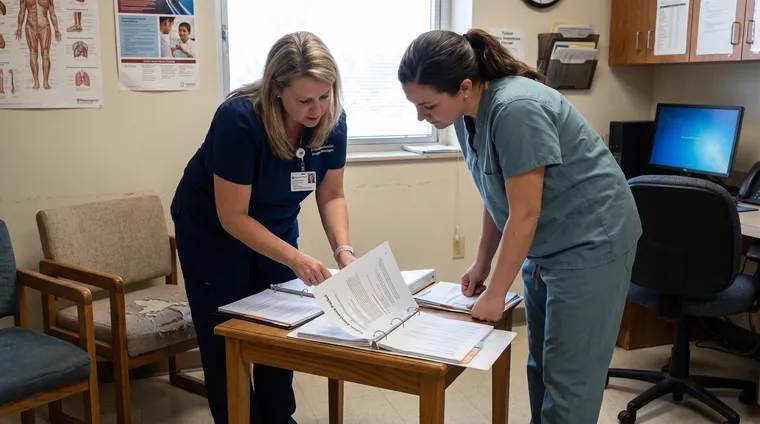
Hospital tuition reimbursement can pay part of MRI school, and some employers will pay TeslaMR directly, but nothing moves until HR puts the school, the certificate, and the dates in writing. Most TeslaMR applicants are self-pay. Plan as if you will write the checks. Treat employer money as a bonus if the policy fits.
TeslaMR tuition, from pricing, is $11,500 upfront, $12,500 quarterly, or $13,400 monthly, each with a $2,000 deposit. Non-Title-IV, so no FAFSA. Not GI Bill or VR&E approved.
Ask HR these questions before you pay the deposit
Get written answers:
- Full-time only, or part-time too?
- Waiting period before you can use the benefit?
- Reimbursement after grades, or direct pay to the school?
- Annual cap, and which calendar year owns the invoice?
- Does a certificate count, or only a degree?
- Books, exam fees, and compliance costs, or tuition only?
- Grade or completion rule?
- Service commitment and repayment if you leave?
- Can MRI host your clinicals?
A hallway “we should be able to do that” is not approval. TeslaMR’s deposit is $2,000. Do not spend it on a guess.
If the employer will also host OJT, read clinicals at my current imaging center. Hosting and paying are two different yeses.
What the tax cap actually does
For 2026, IRS Section 127 lets an employer exclude up to $5,250 of qualifying educational assistance from your wages, if they have a written plan. Unused room does not roll to next year.
TeslaMR costs more than $5,250 on every published plan. A hospital can still pay the rest. That extra may be taxable, or it may sit under another policy. Reddit will have takes. Payroll has the written policy. Read the thread, then ask payroll about the tax line.
Key Takeaway
Section 127 is a tax rule, not a promise your hospital will write a $5,250 check. The written plan wins. TeslaMR can invoice. You still need HR’s form.
How to ask a manager without making it a favor
TeslaMR’s clinical sites page tells employers they can grow techs internally and cites savings versus travelers (the hero line is $90k-plus per tech versus travelers). Use that public page. Do not invent a vacancy-cost spreadsheet your CFO did not sign.
One paragraph is enough:
“I want to enroll in TeslaMR, an ARMRIT-accredited 12–18 month MRI program, tuition $11,500–$13,400. I can keep working through online phases. I am asking the facility to pay tuition under our education policy, or to approve a professional-development exception, in exchange for a written service commitment. TeslaMR can invoice you. If imaging will host my clinicals, TeslaMR also applies a $500 site credit after my first OJT hour.”
Attach the pricing page and the clinical-sites FAQ on volunteer versus paid hours. Aide work alone does not count as OJT.
Employers already named on teslamr.com — RadNet, HCA, Baylor Scott & White, Memorial Hermann — are not a voucher. Ask your campus.
If they say no
Most TeslaMR applicants still pay themselves. Monthly is 24 payments of $475 after the deposit. Scholarships list on /scholarship. TeslaMR does not guarantee that self-pay students get hired as techs. MRI technologists had a national median of $95,480 (BLS May 2025 OEWS; salary map, March 2026).
This path is a poor fit if your policy bans certificate schools and nobody will make an exception. It is a strong fit if imaging is short-staffed, HR already pays for allied credentials, and you can sign a 1–2 year stay.
Bring numbers your manager already accepts. TeslaMR is 12–18 months, no X-ray prerequisite, 334+ clinical sites in 38 states. Clinical hours are usually unpaid volunteer time unless you are on the DOL apprenticeship track. Paid aide shifts do not automatically become OJT. If HR asks whether TeslaMR is Title-IV, the honest answer is no — that is also why the sticker price is not a $40,000 associate degree.
If you are the manager reading this, the employee still has to be someone you would let near a magnet. Sponsorship does not skip TeslaMR’s rubric: genuine interest, relevant experience, tech traits, track record, and communication. A warm body with a budget code is not a student.
Related guides
Frequently Asked Questions
Only if the written tuition policy covers this school, this certificate, and you. TeslaMR can invoice an employer directly. Most TeslaMR applicants are self-pay, so do not treat sponsorship as the default.
IRS Section 127 educational assistance can exclude up to $5,250 of qualifying benefits from your gross income in 2026, if your employer has a written plan. TeslaMR tuition is $11,500, $12,500, or $13,400, so one calendar year of Section 127 usually covers part, not all, unless the hospital adds more under a different rule.
If you already work at an imaging facility and enroll with approval to train there, TeslaMR applies a $500 tuition credit after your first logged OJT hour. That is a school credit, not HR reimbursement. The employer still has to host you.
Yes. TeslaMR's pricing page says employer-sponsored students can be invoiced and may receive additional pricing. Email info@teslamr.com for the sponsorship packet. Get HR's yes in writing first.
Often yes. Many hospital plans attach a 1–2 year service commitment. Leaving early can mean you repay some or all of the benefit. Read the repayment clause before you accept the money.
Then TeslaMR's certificate may be out. Ask whether a manager can use a professional-development budget instead. If both answers are no, use TeslaMR's monthly plan ($475 x 24 after the $2,000 deposit) or a scholarship listing on /scholarship.
No. Sponsorship is tuition. Hiring is a separate requisition. TeslaMR does not guarantee a job at your hospital.