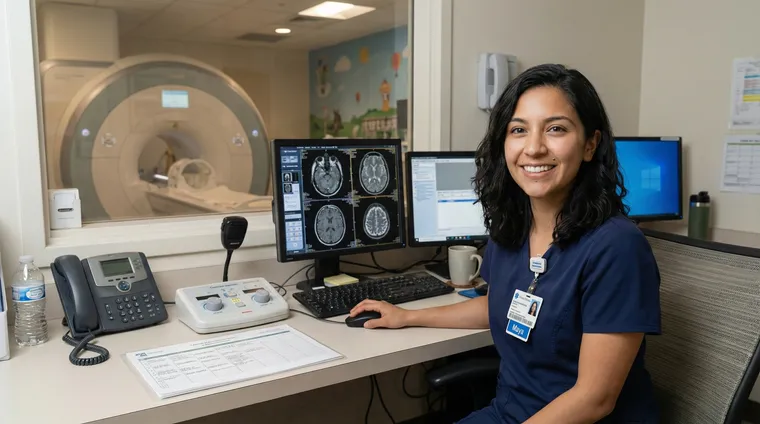
What Entry-Level MRI Technologists Actually Earn
Entry-level MRI technologists earn $55,000–$70,000 per year in their first position, with the national median for all MRI techs at $95,480 (BLS, May 2025). Starting salaries vary by state, work setting, and shift: new techs at outpatient imaging centers or those willing to work evenings, nights, or weekends typically start at the higher end of this range.
For the broader picture across all experience levels — state-by-state pay, hospital vs outpatient, certification impact, and travel MRI rates — see our complete MRI technologist salary guide.
The Bureau of Labor Statistics reports a median annual wage of $95,480 for MRI technologists as of May 2025. But that median includes techs with 10, 15, even 20 years of experience. Entry-level pay looks different.
New MRI technologists with less than one year of experience typically earn $55,000 to $70,000 annually, or roughly $27 to $34 per hour. PayScale data puts the average total compensation for technologists with under one year of experience at approximately $30.55 per hour. The BLS 10th percentile figure of around $61,000 also reflects what most new graduates can realistically expect.
That’s a solid starting point for a career that typically requires an associate degree or certificate program, not a four-year degree.
Starting Salary by Work Setting
Where you work matters as much as where you live when it comes to entry-level pay. Each setting comes with different compensation and tradeoffs.
Hospitals
Entry-level hospital MRI technologists typically start between $58,000 and $72,000. Hospitals tend to pay more because the work is more demanding. You’ll scan a wider range of cases, work rotating shifts, and handle emergency and trauma imaging. The upside: better benefits packages, shift differentials for nights and weekends ($2 to $5 per hour extra), and more clinical variety that accelerates your learning curve.
Outpatient Imaging Centers
Starting salaries at outpatient centers typically run $52,000 to $65,000. The lower pay reflects more predictable hours and a narrower range of exams. You’ll primarily scan musculoskeletal and neurological cases during standard business hours. For some new graduates, the schedule predictability and lower stress environment are worth the pay difference.
Specialty Clinics and Physician Offices
These settings offer starting pay in the $50,000 to $62,000 range. The caseload is typically lower and more repetitive, focused on the clinic’s specialty. These roles can work well as a first position if you want to build confidence in a less hectic environment, but they may limit your clinical growth.
Travel and Per Diem Assignments
While most travel MRI positions require one to two years of experience, some agencies place new graduates in supervised travel roles starting at $1,500 to $2,200 per week. This is the exception, not the rule. Most hiring managers expect travel techs to hit the ground running with minimal orientation, which is difficult for someone fresh out of a program.
How Experience Affects MRI Technologist Pay
The salary trajectory for MRI technologists follows a predictable curve. Here’s what to expect at each stage:
Year 1 (Entry Level): $55,000 to $70,000 You’re building foundational competence. Expect close supervision on complex cases, a learning curve with different scanner platforms, and the steepest growth in clinical skills. Your primary value to employers is your availability and willingness to take less desirable shifts.
Years 2 to 3 (Early Career): $65,000 to $80,000 By now you’re running routine exams independently and developing efficiency. Most employers offer annual raises of 3 to 5 percent, and you may qualify for a step increase based on tenure. This is when your scan quality and patient throughput start to directly impact your earning potential.
Years 3 to 5 (Mid-Level): $75,000 to $90,000 You’re a reliable, independent technologist. Employers are less likely to let you leave without a counteroffer. You may start training new hires or students, which positions you for lead tech roles. Some technologists begin specializing in cardiac MRI, neuroimaging, or musculoskeletal protocols during this phase.
Years 5 to 10 (Experienced): $85,000 to $105,000 Experienced MRI technologists who’ve added specialties, taken on lead responsibilities, or moved to higher-paying markets can reach or exceed six figures. The salary variation by specialty is significant at this stage.
Years 10+ (Senior/Lead): $95,000 to $120,000+ Lead technologists, department supervisors, and those with multiple modality credentials (MRI plus CT, for example) command the highest compensation. Some move into education, applications specialist roles with scanner manufacturers, or management. For a full breakdown of where top earners work and how they get there, see our highest paying MRI tech jobs guide.
What Affects Your Starting Offer
Several factors determine whether you land at the low or high end of the entry-level range.
Geographic Location
This is the single biggest variable. An entry-level MRI technologist in San Francisco might start at $75,000. The same role in rural Mississippi might pay $48,000. Check our salary by state guide for specific numbers, but always weigh pay against local cost of living. A $60,000 salary in Dallas goes further than $75,000 in Boston.
Your Credentials and Training
The credential itself (ARRT versus ARMRIT) matters less than the depth of your clinical training. Employers pay attention to how many clinical hours you completed, the variety of exams you performed, and how quickly you can work independently. Programs with extensive clinical rotations, like Tesla MR Institute’s program with over 334 clinical sites across 38 states, give graduates a practical advantage because they’ve scanned real patients in real clinical environments.
Shift Willingness
New graduates willing to work evening, night, or weekend shifts often start $3,000 to $8,000 higher in effective annual pay through shift differentials. A $2.50 per hour night differential on a full-time schedule adds roughly $5,200 per year. If you can handle the schedule, this is the easiest way to boost your first-year earnings.
Multi-Modality Skills
If you hold credentials in both MRI and another modality (CT, X-ray, mammography), you’re significantly more valuable to employers. Dual-credentialed entry-level technologists can command $5,000 to $10,000 more than single-modality peers, especially in smaller facilities where versatility matters.
Negotiation
Most new graduates accept the first offer without negotiating. That’s a mistake. Even at entry level, there’s usually room to negotiate. Research local salary ranges using job postings and the BLS wage data. Lead with specifics about your clinical training: patient volume, protocols you’re comfortable with, and any specialty experience. If base salary is firm, negotiate on sign-on bonus, CE reimbursement, or shift preference.
Entry-Level MRI Tech Salary Compared to Similar Roles
MRI technology pays competitively against other imaging and allied health roles at the entry level:
- Radiologic Technologist (X-ray): $48,000 to $58,000 starting
- CT Technologist: $55,000 to $68,000 starting
- MRI Technologist: $55,000 to $70,000 starting
- Ultrasound Technologist: $58,000 to $72,000 starting
- Nuclear Medicine Technologist: $60,000 to $72,000 starting
MRI sits in the upper tier of imaging modalities for entry-level pay. For a deeper comparison, see our cross-modality salary breakdown.
The Benefits Package Matters More Than You Think
At entry level, it’s tempting to focus exclusively on base salary. But benefits can add $15,000 to $25,000 in total compensation value. Pay attention to:
- Health insurance: Employer-paid premiums save $4,000 to $8,000 per year
- Retirement matching: A 4% match on a $60,000 salary is $2,400 per year in free money
- CE reimbursement: $500 to $2,000 annually for continuing education credits
- Tuition assistance: Some employers will pay for additional credentials
- PTO and sick time: 15 to 20 days annually is standard for healthcare
- Sign-on bonuses: $2,000 to $10,000, increasingly common due to staffing shortages
A position paying $58,000 with strong benefits might be worth more than a $65,000 offer with bare-bones coverage. Do the full math before comparing offers.
How to Maximize Your Earning Potential From Day One
Your first few years set the trajectory for your entire career. Here are the moves that compound over time.
Build clinical competence fast. The technologists who advance quickest are the ones who become reliable, efficient, and safe early. Focus on reducing repeat scans, optimizing image quality proactively, and managing patient anxiety effectively. Technical competence is the foundation everything else builds on.
Say yes to the hard shifts. Night and weekend shifts pay more and expose you to a wider variety of cases, including trauma and emergency imaging. The clinical variety accelerates your growth, and the pay differential pads your salary while you’re building experience.
Document everything. Keep a log of the exams you’ve performed, protocols you’ve learned, and any quality improvement contributions. This becomes your evidence during salary negotiations at your first annual review or when you’re ready to move to a new position.
Pursue specialization early. If cardiac MRI, neuroimaging, or another specialty interests you, express that interest to your supervisor within your first year. Employers value techs who show initiative, and early specialization positions you for higher-paying roles sooner. Check our guide on MRI career paths for a detailed look at where different specializations lead.
Don’t stay too long at your first job if the pay stagnates. Loyalty is admirable, but the biggest salary jumps in MRI technology typically come from changing employers, not from annual raises. If your second-year review doesn’t bring a meaningful increase, start exploring the market.
Starting Your MRI Career
Entry-level MRI technologist salaries provide a strong financial foundation, especially considering the relatively short training timeline compared to many healthcare careers. With strategic choices about where you work, what shifts you take, and how quickly you build competence, you can accelerate past the entry-level range within two to three years.
The demand for MRI technologists continues to grow. The BLS projects 5% job growth for radiologic and MRI technologists through 2033, and the ongoing MRI staffing shortage means employers are competing for qualified candidates, even at the entry level.
If you’re ready to start your path toward becoming an MRI technologist, understanding the full program requirements and certification process is the logical next step.
Related Reading
Frequently Asked Questions
Entry-level MRI technologists earn between $55,000 and $70,000 annually in most markets. The Bureau of Labor Statistics reports that MRI technologists in the bottom 10th percentile earn approximately $61,000 per year, which closely reflects starting wages for new graduates.
Entry-level MRI technologists typically earn $27 to $34 per hour before shift differentials. PayScale data shows technologists with less than one year of experience averaging around $30.55 per hour in total compensation.
Hospitals generally pay entry-level MRI technologists $3,000 to $8,000 more annually than outpatient imaging centers. However, outpatient roles typically offer more predictable schedules without overnight or weekend requirements.
Most MRI technologists see meaningful salary increases within their first three to five years. Moving from entry level to mid-career typically adds $10,000 to $20,000 in annual earnings. By year five, many techs earn $75,000 to $85,000 depending on location and setting.
California, Washington, Oregon, DC, and Alaska now lead in MRI technologist mean annual wages (BLS May 2025), and entry-level pay scales accordingly — typically $68,000 to $85,000 for new graduates in those markets. However, cost of living in these states is also significantly higher than the national average.
Yes. Due to ongoing staffing shortages, many employers offer sign-on bonuses ranging from $2,000 to $10,000 for new MRI technologists. These are more common in hospitals, rural facilities, and areas with limited MRI tech programs.